Company feature
Company facts are attributed to its published materials. The common-ownership disclosure appears at the end of this feature.The company
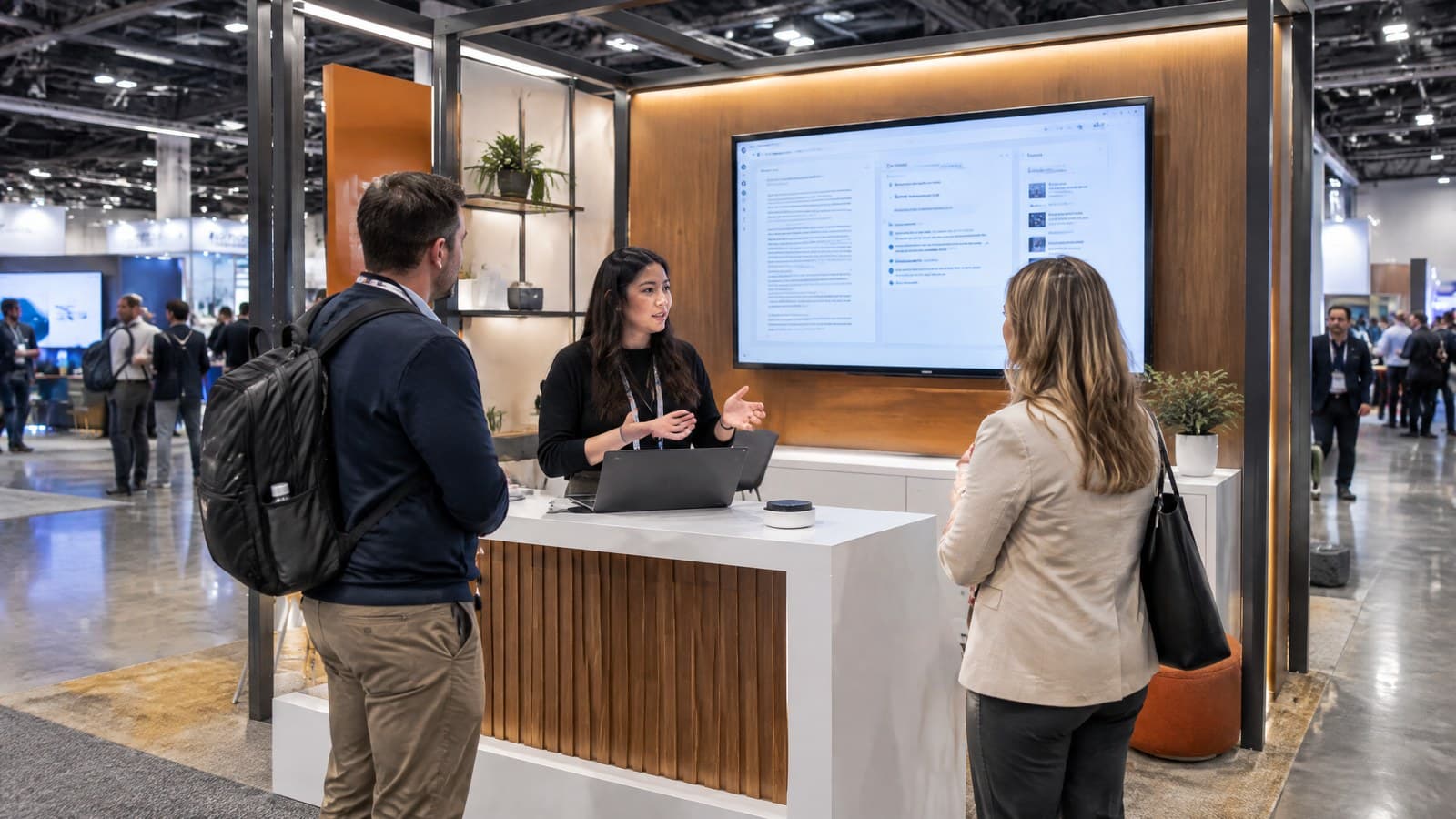
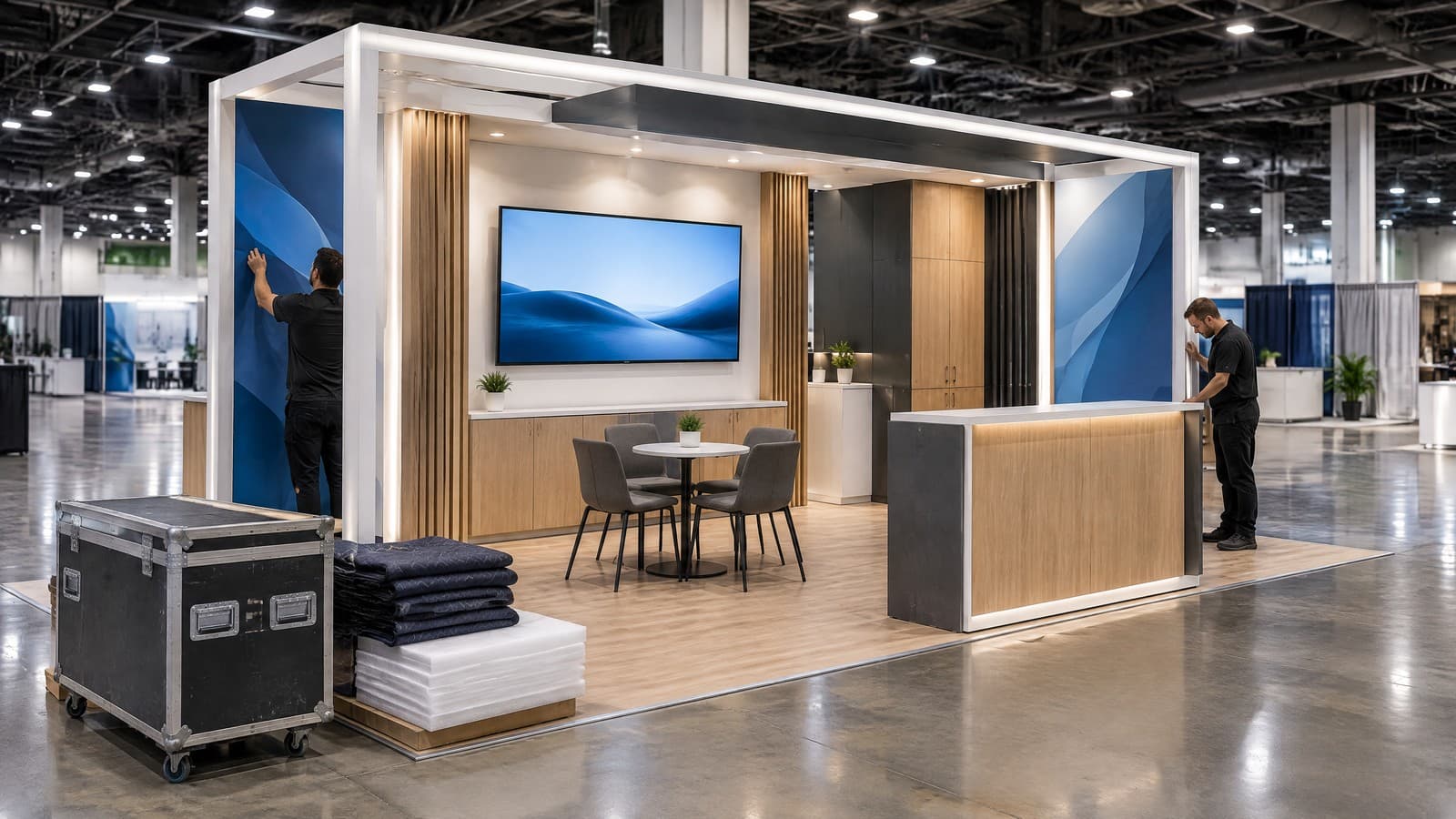
Las Vegas Exhibit House is a trade show exhibit rental and custom fabrication company working out of Las Vegas, with a second operation in Orlando. It has more than 500 completed builds behind it and ranges from 10x10 inline footprints through 40x40 islands and larger.
The positioning is unusually narrow for an exhibit house, and deliberately so. Plenty of firms will tell you they serve Las Vegas. What that usually means is that they will build somewhere else and truck it in. Las Vegas Exhibit House has been working that model since 2014 from the other direction — hold the inventory, the production and the crews in the market where the shows actually are, and treat everywhere else as the outbound leg.
Why the location is the product
Las Vegas is the largest exhibition market in the United States. The Las Vegas Convention Center alone carries about 2.9 million square feet of exhibit space, and in January 2026 the city hosted 672,100 convention attendees in a single month.
What it does not have is a manufacturing base. Almost everything standing on a Las Vegas show floor was trucked in, and a large share of it comes through Southern California — which is the single most expensive diesel market in the country. In the week ending 21 September 2026, California averaged $8.246 a gallon for on-highway diesel against a US average of $6.529.
That is the arithmetic the company is built around. An exhibit already warehoused in Las Vegas and delivered to a Las Vegas show is a cross-town move. An exhibit warehoused anywhere else is a long-haul linehaul, plus a fuel surcharge calculated on a lane that likely touches that California number, plus a transit window that has to survive weather, breakdowns and dock congestion during the busiest weeks of the show calendar.
Removing the long-haul leg does not discount those costs. It deletes them.
There is a second advantage that never shows up on a quote. When the exhibit is already in the valley, a problem found at seven in the morning on move-in day is a van trip. When it shipped in from two thousand miles away, the same problem is an expedite, a reprint, or a gap in the stand on opening morning.
What they actually do
The company runs ten service lines that together cover the whole arc of a show, from the first floor plan to the crate coming back into storage.
| Service | What it covers |
|---|---|
| Exhibit rentals | Inline and island footprints from a verified configuration, adapted around graphics, meeting areas, displays, storage and floor plan |
| Custom design & fabrication | New builds or adaptation of an existing system around demos, private meetings, hospitality, storage, lighting and digital content |
| Graphics production | Artwork specification, preflight, output, finishing, labeling, packing and installation |
| Project management | One project lead across design decisions, graphic approvals, freight milestones, venue requirements, labor scheduling and service orders |
| Freight & logistics | Outbound routing, advance-warehouse or direct-to-show decision, material-handling touchpoints, documentation, return freight |
| Installation & dismantle | Labor calls, supervision, work windows, install sequencing, opening-day punch list, dismantle and repack |
| Show-services coordination | Electrical, internet, rigging, material handling, cleaning and lead retrieval mapped against the show's official providers |
| AV & interactive | Displays, LED integration, presentation zones, interactive touchpoints, content playback, cable paths, lighting |
| Warehousing & assets | Storage between events, inbound inspection of returning components, asset inventory, repair and refresh planning |
| Refurbishment | Replacement graphics, worn-component repair, layout reconfiguration and finish replacement to extend an existing exhibit |
The reason that list matters is not breadth for its own sake. It is that every boundary between two suppliers on a show project is a place where something gets dropped — the graphic that was sized before the structure changed, the freight booked before the labor call was set, the electrical ordered after the discount deadline passed. A single project lead carrying design decisions, graphic approvals, freight milestones, venue requirements, labor scheduling and service orders is not a luxury on a compressed Las Vegas move-in. It is the difference between a punch list and a crisis.
Production is in-house
A good deal of what the industry calls fabrication is actually brokerage — a firm takes the order and places the work with whoever has capacity. Las Vegas Exhibit House runs its own printers, its own CNC machinery and its own signage production, supported by a facility carrying 40,000 square feet of storage, 20,000 of CNC wood fabrication and 20,000 of graphic printing.
The practical effect lands on graphics more than anything else. Their stated approach is that each graphic is produced for the specific surface it will occupy rather than resized from another project — which sounds obvious and is routinely not what happens. A header scaled down from a different frame is how a booth ends up with type that is slightly wrong, colour that shifted, and a bleed that does not reach the edge of the extrusion.
The details that show floor experience
Marketing copy is easy to write. Operational literacy is harder to fake, and there are three places on this company's own materials where it shows.
- They call material handling the most underestimated line on a show budget — and plan packaging and weight around it. Anyone who has read a drayage invoice knows that is the correct thing to be worried about, and that the time to worry is when the crates are being built, not when the bill arrives.
- They map service orders against discount deadlines rather than surcharge deadlines. That is a distinction most exhibitors learn the expensive way. Orders placed after the advance deadline commonly run 30% to 50% higher for identical work, and the deadline that matters is the early one, not the last one the form will accept.
- They specify pixel pitch and brightness against actual viewing distance rather than brochure numbers. A screen specified on paper and a screen legible from the aisle are two different purchases, and the gap between them is usually money spent on resolution nobody standing in the booth can resolve.
They also note that Las Vegas labor jurisdiction requires particular labor-call procedures, which they handle. That is worth knowing going in: straight time in Las Vegas runs Monday to Friday, 8:00 a.m. to 5:00 p.m. with a lunch break, a nine-hour window holding eight billable hours and no slack. A late truck in Las Vegas does not cost you the morning. It costs you overtime, and show-floor overtime is commonly double the straight-time rate rather than time and a half.
Who the model suits
An honest profile should say where a company fits rather than claim it fits everyone.
The local-inventory model is strongest for an exhibitor doing one to three Las Vegas shows a year who does not want to own, store and refurbish a structure between them. It suits a program that wants one accountable party across design, graphics, freight, labor and show services rather than four suppliers and a spreadsheet. And it suits anyone whose freight would otherwise originate in or transit California, where the fuel maths is currently at its most punishing.
It is a less obvious fit for an exhibitor with a heavily customised owned property that shows eight or ten times a year across many cities. That program has different economics, and the honest answer there is usually asset management and refurbishment rather than rental — which, to be fair, is also on the company's service list.
Booking
Las Vegas Exhibit House recommends three to four months ahead for the best pricing and availability, which is consistent with how the rest of the calendar behaves. The binding dates are almost always earlier than the show itself: advance-rate deadlines on show services commonly land about four weeks out, exhibitor appointed contractor paperwork around thirty days out, and hotel block cutoffs earlier still.
The company can be reached at (702) 760-4036.
FAQ
What is Las Vegas Exhibit House?
Las Vegas Exhibit House is a trade show exhibit rental and custom fabrication company operating in Las Vegas since 2014, with more than 500 completed builds. It provides rental and custom exhibits from 10x10 inline footprints through 40x40 islands and larger, along with graphics production, freight, installation and dismantle, show-services coordination, warehousing and refurbishment.
Why does a local Las Vegas exhibit house cost less?
Because an exhibit warehoused in Las Vegas and delivered to a Las Vegas show is a cross-town move rather than a cross-country one. That removes the long-haul linehaul, the fuel surcharge calculated on it, and the transit window that has to be protected. With California diesel averaging $8.246 a gallon in the week ending 21 September 2026 against a US average of $6.529, and Southern California a major feeder lane into Las Vegas, the gap has widened.
What booth sizes does Las Vegas Exhibit House offer?
Rental and custom configurations run from 10x10 inline footprints through 40x40 islands and larger. Rentals start from a verified configuration which is then adapted around graphics, meeting areas, product displays, storage and floor plan rather than being taken as a fixed package.
Does Las Vegas Exhibit House produce its own graphics?
Yes. The company states that production is in-house - its own printers, CNC machinery and signage production rather than outsourced work - supported by a facility with 40,000 square feet of storage, 20,000 square feet of CNC wood fabrication and 20,000 square feet of graphic printing. Graphics are produced for the specific surface they will occupy rather than resized from another project.
How far in advance should I book a Las Vegas exhibit?
Las Vegas Exhibit House recommends three to four months ahead for best pricing and availability. The binding dates are usually earlier than the show: the advance-rate deadline on show services commonly falls about four weeks out, exhibitor appointed contractor paperwork around thirty days out, and the hotel block cutoff earlier still.
Disclosure: Trade Show Exhibit News and Las Vegas Exhibit House are under common ownership.
Sources are linked at the point of each claim. If you have a service manual, rate sheet, invoice, or correction, tell the editor.